30 March 2015

What Age for the Sacrament of Confirmation

 In 2002 Bishop Aquila of Fargo, now the Archbishop of Denver, changed the age for receiving the Sacrament of Confirmation from students usually in high school to second graders, prior to their reception of the Sacrament of the Eucharist. This follows the historical tradition for administering the Sacrament at a younger age in the Latin Rite as well as being closer to the Eastern rite Churches which administer Baptism and Confirmation in the same ceremony. Below is an excerpt from an article from 2011 in which he explains his rationale for making the change, the full article which should be read in its entirety. http://www.catholicnewsagency.com/news/bishop-aquila-urges-sacrament-of-confirmation-before-first-eucharist/
“Turning to the present administration of the sacrament, Bishop Aquila questioned whether the common placement of confirmation in late adolescence treats it as “a reward, or worse, as something earned or deserved for attendance and work in a parish catechetical program.”
“Should the fear of not receiving a sacrament ever be used as a means to keep a young person involved in the life of the Church? Should the gift and strengthening of the Holy Spirit be denied young persons in their most formative years?” he asked.

Bishop Aquila also wondered whether the special attention and length of preparation given to confirmation makes many perceive it to be more important than Baptism and the Eucharist.
The view that confirmation is a way for young people to make a personal commitment to their faith “distorts” the sacrament, he said.
“Confirmation is not marked by a choice to believe or not believe in the Catholic faith.
Rather as disciples we are chosen by God to receive the fullness of the Holy Spirit, to be sealed with the gift of the Holy Spirit generously bestowed by God, and we are called to cooperate with that grace,” he explained.
Pope Benedict endorsed the move in comments he made to Bishop Aquila during his visit to Rome,
 
“I was very surprised in what the Pope said to me, in terms of how happy he was that the sacraments of initiation have been restored to their proper order of baptism, confirmation then first Eucharist,” said Bishop Aquila, after meeting Pope Benedict on March 8. 
It is precisely the attitude of the Sacrament as a ‘personal commitment of the Faith’ that is so prevalent in many of the Confirmation prep/Faith Formation programs today and one which needs to be corrected. Notice how crucial this Sacrament is to one’s salvation as stated by St. Thomas and then consider the number of students today who refuse this Sacrament as they have fallen victim to the secular age around them. Retooling the current programs is nothing short of rearranging the proverbial chairs on the deck of the Titanic. What is needed is full restoration of the traditional ordering of the Sacrament to adolescent children. The Sacrament is not merely for students to make an affirmation of their Faith, or lack thereof, but the necessary grace to engage in spiritual combat. “whereas in Confirmation he receives power to do those things which pertain to the spiritual combat with the enemies of the Faith.” From the Summa Theologica, Article 5 on Confirmation.

This decision will ultimately have to come from the Bishops as they are the ones who set the overall policy in their Dioceses for the faith formation coordinators to follow. But it is the pastors and coordinators who can encourage this change as they are the ones with firsthand knowledge of the crisis.

Here is more teaching from St. Thomas Aquinas on the Sacrament of Confirmation

     Article 1: Whether Confirmation is a Sacrament

            Reply to Objection 3. As stated above (Question 65, Article 4), all the sacraments are in some way necessary for salvation: but some, so that there is no salvation without them; some as conducing to the perfection of salvation; and thus it is that Confirmation is necessary for salvation: although salvation is possible without it, provided it be not omitted out of contempt.       

Article 8. Whether this sacrament should be given to all?

Reply to Objection 2. As stated above, the age of the body does not affect the soul. Consequently even in childhood man can attain to the perfection of spiritual age, of which it is written (Wisdom 4:8): "Venerable old age is not that of long time, nor counted by the number of years." And hence it is that many children, by reason of the strength of the Holy Ghost which they had received, fought bravely for Christ even to the shedding of their blood.

24 March 2015

Blessed Jordan of Saxony: Tips on Vocations

In preparing for a talk I need to make for our Serra District Conference this weekend I came across this article Blessed Jordan of Saxony: 5 Tips on Vocations.

Blessed Jordan of Saxony was the first successor of St. Dominic as Master of the Order of Preachers. He wrote the first work about the Order, his Libellus on the Beginnings of the Order of Preachers. He was renowned for his prudence in administration, as well as his ability to attract and receive vocations to the Dominicans. As a result, he is the patron of vocations for the Dominican Order. Here are five examples from Bl. Jordan on finding one’s vocation and leading others to theirs.
   
1.      Bring a friend.

Bl. Jordan recounts in his Libellus how the preaching of Bl. Reginald of Orleans inspired him and many men to join the Order of Preachers. Although little known in our time, Reginald was a well-known and well-educated cleric who joined the Dominican friars—our first “big catch.” His dynamic and fiery preaching brought the first great wave of vocations into Dominic’s fledging Order. Jordan, and his dear friend Henry, were among these.
Jordan recounts how Reginald’s preaching moved him to recognize the Dominican Order as a “sure road to salvation.” His friend Henry, though, was dragging his feet. Jordan remained determined to enter with his best friend and companion in holiness. But Henry resisted. Then one night, they searched out a church dedicated to the Blessed Virgin Mary, and as he and Henry were praying there after Matins, Henry received a vision and the grace to enter the Order. Finally, on Ash Wednesday, they went together to the Dominican priory in Paris, and entered the Order. They may have been the first pair of friends to enter the Order together, but they certainly were not the last.

There is much talk about "discerning one's vocation" these days, particularly as it relates to the priestly or religious life. But this story told by Bl. Jordan reminds me of how the Apostles responded when Christ called them.

On one feast day, when he was receiving a student after the sermon and many students were present, he said to the assembly, "If one of you were going to a great feast and banquet alone, would your companions be so indifferent that none of them would want to accompany you? You see that this young man has been called to a great feast thrown by God; are you going to let him go off alone?" These words had such an impact that one student who had no previous intention of entering the Order came out in the middle and said, "Master, at your word, I join him in the name of our Lord Jesus Christ." And he was received together with him.
Pray for many more young men willing to accept such a call. Here is the link to the original article for the remaining ideas.

18 March 2015

Is the Parish Faith Formation Program a Spiritual Orphanage?

Having taught catechism before I have seen both sides of the problem as the writer describes. I think her comparison of  parish faith formation programs to "spiritual orphanages" is spot on.

The norm is to assume that Catholic parents simply cannot be trusted to teach their children the Catholic faith.
If you spend much time around Catholics, you know this fear has its basis in sordid reality.

The Solution that Is No Solution

So what do you do when the parents in your parish are not living up to their responsibilities? Our current solution is to swoop up all the children and put them in a classroom an hour a week with a spiritual orphanage worker. Since the parents are unable to teach, we’ll teach for them.
There’s fallout, of course. It’s exhausting trying to parent twenty children, many of whom have been spiritually neglected for years. It’s difficult finding qualified volunteers, because the work is frustrating and so many adults in the parish don’t know their faith. Because new families are constantly trickling in with their never-catechized children, we end up having to re-teach the same basic facts year after year. We’re nowhere near hitting diocesan standards — if our ninth graders have never opened a Bible, they certainly haven’t read whole books of it.
The staff and the parish resources are stretched so thin there simply isn’t room for adult faith formation. We’re too busy taking care of the orphans — whose parents are sitting in the parking lot waiting for class to get out.
Meanwhile, the kids age out of our programs and leave the faith, because they lack the the factor that has the most bearing on whether an adult continues to practice the faith: Having been raised in a home where the parents were disciples.
Parents Have Immortal Souls, Too
When you monkey around with Church teaching, bad things happen. We’ve identified a problem — kids whose parents aren’t disciples — and we’re so busy “solving” the crisis by heroically stepping in to replace the parents, that we’ve overlooked a small detail: Doing so is contrary to the Catholic faith.

Read more: http://www.patheos.com/blogs/jenniferfitz/2015/03/the-hero-complex-that-is-destroying-the-catholic-faith/#ixzz3UkHItAKP

03 December 2014

Malta Minute's - A 60 Second Catechism Lesson

As more people are discovering the Order of Malta they are sharing their feelings of what we should be doing and how we should be doing it, particularly with regard to the "tuitio fidei" portion of our motto. Here is a link to one initiative started a few years ago by the American Association. It is a series of one minute lessons on the Catechism. These Malta Minutes can be heard on Catholic radio stations around the country. https://avemariaradio.net/resourc…/archives/search-results/…

Novena in honor of Blessed Gerard

Day 1 - Founder and Superior of the Pilgrims' house. With the Bull Pie postulatio voluntatis of 15 February 1113, Pope Paschal II placed the newly founded Hospice under the protection of the Holy See. In it, he described Gerard as the "Founder and Superior of the Jerusalem Hospital" (Institutor ac praepositus Hierosolymitani Xenodochi). The word "xenodochium" stood for much more than "hotel" means today. It was a shelter for strangers, for visitors, and for pilgrims. Assistance to pilgrims in the Holy Land thereby became a responsibility of the Knights of Saint John at that time, as it later became along the "Way of Saint James" to Compostela or during the Holy Year 2000 in the Roman Basilicas of Saint Peter, Saint John Lateran, Santa Maria Maggiore and Saint Peter outside the Walls. In Gerard’s shelter, pilgrims were cared for in both body and spirit. So that their journey might be without incident, both the House and several of the roads used by pilgrims were watched and protected from the very beginning by armed men under the command of Gerard; but the fundamental element was spiritual fortification. In this, Gerard was the model - a man of action and a man of prayer.
Prayer
Jesus Christ, Lord of time and of eternity, grant that all people may recognize the light of your truth; 
R.: Lord hear our prayer
grant that we may understand events in the light of the Holy Spirit and with your help persevere in goodness and compassion 
R.: Lord hear our prayer
grant that we may recognize people’s needs in our own day and come to their aid. 
R.: Lord hear our prayer
send helpers to our side and do not abandon us in our earthly pilgrimage. 
R.: Lord hear our prayer

Pater... Ave... Gloria... 

Pray for us, Blessed Gerard 
R.: that we may be worthy of the promises of Christ. 

Let us pray.
Direct our actions, O Lord, with your inspiration and accompany them with your aid, that all our works may at all times begin in you and through you reach their end. We ask this through our Lord Jesus Christ your Son, who lives and reigns with you and the Holy Spirit, one God, for ever and ever.
Day 2 - Provider and Almoner. The term "provider" (provisor: Paschal II, 1113) describes Gerard as a man capable of planning and foreseeing what the pilgrims, the poor and the sick would need and where help was required. Prudent organization put Gerard in the best possible position to fulfill his duties as an "almsgiver" (elemosinarius: in a document of Count Adalbert de Perigord, 17 September 1116). In today’s world, we stand in need of efficient organization of the Order and its aid services which are active throughout the world. But organization must not become an end in itself or be smothered in paperwork. Its objective must be to act to bring assistance promptly and effectively. We must never forget what the Lord says to us: whenever you give alms, do not sound a trumpet before you ... let your alms be done in secret; and your Father who sees in secret will reward you (cf. Mt 6:2).
Prayer
Lord Jesus Christ, friend of the poor and of the sick, grant to all people in this world an increase of peace and freedom. 
R.: Lord hear our prayer
give us a ready ear and open hand for those in want. 
R.: Lord hear our prayer
grant that we may never be entangled in worldly considerations, techniques, and statistics. 
R.: Lord hear our prayer
grant that all our projects and planning may be for the love of our neighbour. 
R.: Lord hear our prayer

Pater... Ave... Gloria... 

Pray for us, Blessed Gerard
R.: that we may be worthy of the promises of Christ. 

Let us pray:
Almighty and merciful God, let not the concerns of this world keep us from hastening toward your Son but let the guidance of heavenly wisdom make us into his companions, who lives and reigns with you and the Holy Spirit, one God, for ever and ever.
Day 3 - Father of the Hospital. In the year 1120, King Baldwin of Jerusalem described Gerard as the "father" (pater) of the Jerusalem Hospital. A good father watches over his children with love and also with strictness when required. He is present when his family needs him. Gerard directed his foundation and regarded his paternal responsibility as a gift from God, as a talent to be used. In our day we must never presume to set ourselves up as fathers, teachers, or instructors on our own account (cf. Mt 23: 9-11), but rather see our duties as parents, as superiors, or as academics as a responsibility before God and man: All who exalt themselves will be humbled, and all who humble themselves will be exalted (Mt 23:12).
Prayer
Jesus Christ, God and man, Son of the Father, help our families to see ever more clearly their duties as the domestic Church. 
R.: Lord hear our prayer
help couples to remain united in fidelity in a world hostile to marriage. 
R.: Lord hear our prayer
help parents and children to understand one another. Lord hear our prayer. 
R.: Lord hear our prayer
help academics, researchers and teachers to fulfil their duties responsibly in your sight. 
R.: Lord hear our prayer

Pater... Ave... Gloria... 

Pray for us, Blessed Gerard
R.: that we may be worthy of the promises of Christ. 

Let us pray:
O God, in love of you and of our neighbour you have established everything that the sacred laws decree; grant unto us that, in keeping your commandments, we may enter into eternal life. We ask this through our Lord Jesus Christ your Son, who lives and reigns with you and the Holy Spirit, one God, for ever and ever.
Day 4 Guardian of Christ's Poor. Gerard was called the "guardian of Christ’s poor" ("procurator pauperum Christi", in a document of Bishop Ademar di Rodez, 1120). Procurator can mean administrator or governor, but also representative who acts on someone’s behalf in court. Through his works, Gerard was the defender of the poor, the weak, the abandoned. The term "Christ’s poor" shows us that "obsequium pauperum" is a service rendered not only to the poor but also to Christ himself: "for I was hungry and you gave me food, I was thirsty and you gave me something to drink, I was a stranger and you welcomed me, I was naked and you gave me clothing, I was sick and you took care of me, I was in prison and you visited me" (Mt 25: 35-37).
Prayer
Lord Jesus Christ, Saviour, Redeemer, let us recognize you in the poor, the sick and the stranger. 
R.: Lord hear our prayer
bless and protect all the goods of the earth and give to all their daily bread. 
R.: Lord hear our prayer
call forth vocations for your service alone. 
R.: Lord hear our prayer
grant unto us the strength of the Holy Spirit to give of ourselves for the persecuted and oppressed whether it suits us or not. 
R.: Lord hear our prayer

Pater... Ave... Gloria... 

Pray for us, Blessed Gerard
R.: that we may be worthy of the promises of Christ. 

Let us pray:
O God, you show to those in error the light of your truth that they may return to the right path; grant that all who profess the Christian faith may reject those things which are contrary to that name and follow such things that are appropriate to it. We ask this through our Lord Jesus Christ your Son, who lives and reigns with you and the Holy Spirit, one God, for ever and ever.
Day 5 - Servant of God. "Dei servus", helper, servant of God (in a document of the Bishop Ademar di Rodez, 1120): this description of Blessed Gerard is a description often used by the Church for her members, the baptized. During the beatification process, as a declaration of heroic virtue, of an exemplary life, the candidate is accorded the title of "Servant of God". The servant of the servants of God, "servus servorum Dei", is also one of the titles of the Holy Father. We are all therefore servants of God; by his actions, Gerard demonstrated this fact to us in an exemplary fashion.
Prayer
Jesus Christ, Emmanuel, Messiah, preserve us from arrogance and selfishness. 
R.: Lord hear our prayer
keep us in your service. 
R.: Lord hear our prayer
grant that we may know our duty in the Church and in the world and to fulfill it. 
R.: Lord hear our prayer
direct our hearts and minds toward the things of heaven. 
R.: Lord hear our prayer

Pater... Ave... Gloria... 

Pray for us, Blessed Gerard 
R.: that we may be worthy of the promises of Christ. 

Let us pray.
O God, you dispose the hearts of the faithful as one in their desire; grant that your people may love what you command and desire what you promise, that amid the varied changes of this world, our hearts may be fixed where true joys may be found. We ask this through our Lord Jesus Christ your Son, who lives and reigns with you and the Holy Spirit, one God, for ever and ever.
Day 6 - Servant and Helper of the Hospital. Gerard described himself in 1101 as "servant (servus) of the Hospital of Holy Jerusalem" in a document given to Pope Paschal II and the Patriarch Daimbertus; and again, in 1110, to the Abbots of Cluny and of Moissac as "servant and minister of the Hospital". "Servus" means not only "helper" or "servant", but also "slave", although we should keep in mind that even though slaves were not freemen, they were not, according to Roman Law, entirely without rights. "Minister" is not a term of authority, as we might be led to think; minister in this context is to be understood much more as one who carries out the Lord’s will. Helper, servant, slave, assistant, executor of the Lord’s will: who would be that today? Gerard was and is thereby a call upon our obedience to God, to the Church, and the Superiors in our Order.
Prayer
Jesus Christ, obedient unto death, even death on a cross, strengthen and sustain us as your followers. 
R.: Lord hear our prayer
grant that we may recognize our responsibility for human life from its beginning. 
R.: Lord hear our prayer
bless all those who provide service in hospitals, homes for the aged, and hospices. 
R.: Lord hear our prayer
help all people to serve you and their neighbour in the strength of the Holy Spirit. 
R.: Lord hear our prayer

Pater... Ave... Gloria...

Pray for us, Blessed Gerard
R.: that we may be worthy of the promises of Christ. 

Let us pray:
Almighty and everlasting God, who in the paschal mystery established the covenant of reconciliation with all mankind, grant that we may show forth in our live s what we solemnly pro fess. We ask this through our Lord Jesus Christ your Son, who lives and reigns with you and the Holy Spirit, one God, for ever and ever.
Day 7 - Lord. In Blessed Gerard’s time, the title "Lord" (Dominus) was used only for popes, bishops, emperors, kings and other distinguished persons; and yet Gerard was also called Dominus (in a document of 1112 regarding a foundation established for the honour of God by several bishops which was dedicated to the Holy Sepulchre and the Hospital). The title "Lord", as a term of honour, can only be justified if we recognize that all power and glory and honour belong to God alone, as we sing in the Gloria of the Mass: "You alone are the holy one, you alone are Lord, you alone are the most high, Jesus Christ" (Tu solus Sanctus, tu solus Dominus, tu solus altissimus Iesu Christe). Perhaps it is time to reflect upon these words and our own relationship with the one Lord, Jesus Christ.
Prayer
Jesus Christ, holy one, Lord, most high,may we recognize you in our lords the sick. 
R.: Lord hear our prayer
grant that we may see our responsibility as you would see it. 
R.: Lord hear our prayer
grant that all who hold office and authority in politics and business may contribute to the good of all. 
R.: Lord hear our prayer
send your Holy Spirit that we may rightly judge our strengths and our weaknesses. 
R.: Lord hear our prayer

Pater... Ave... Gloria...

Pray for us, Blessed Gerard 
R.: that we may be worthy of the promises of Christ. 

Let us pray:
Grant, we beseech you, almighty God, that we who have received the grace to know the Lord is risen, may, through your Spirit’s love, rise to newness of life. We ask this through our Lord Jesus Christ your Son, who lives and reigns with you and the Holy Spirit, one God, for ever and ever.
Day 9 - Christ has died, Christ is risen. With the reform of the liturgy in years following the Second Vatican Council, the acclamation "mortem tuam annuntiamus, Domine, et tuam resurrectionem confitemur", rendered as "Christ has died; Christ is risen", became our profession of faith after the consecration. This phrase repeats the original credo of the Church, the confession of the death and resurrection of the Lord. It was with this faith too that Blessed Gerard worked in Jerusalem near to the place where the death and resurrection of Jesus Christ occurred, the Church of the Holy Sepulchre of Jerusalem that embraced the traditional sites of the death, burial and resurrection of the Lord: "... and if Christ has not been raised, then our proclamation has been in vain and your faith has been in vain..." (1 Cor 15:14). In our own day we must again become aware of this Easter faith that Gerard lived. During Easter, we the baptized are most intimately joined with Christ. "God raised us up with Him and seated us with Him in the heavenly places in Christ Jesus" (Eph 2:6); "so if you have been raised with Christ, seek the things that are above, where Christ is, seated at the right hand of God" (Col. 3:1-2).
Prayer
Lord Jesus Christ risen from the dead, strengthen us in faith, in trust and in love. 
R.: Lord hear our prayer
make the Holy Land a land of peace between peoples where your praises may sound. 
R.: Lord hear our prayer
send us your Spirit that we may proclaim your death and profess your resurrection until you come in glory. Lord hear our prayer. 
R.: Lord hear our prayer
welcome our dead in your heavenly Jerusalem. 
R.: Lord hear our prayer

Pater... Ave... Gloria... 

Pray for us, Blessed Gerard
R.: that we may be worthy of the promises of Christ. 

Let us pray:
Let your people, renewed in youth of spirit, O God, rejoice always that those who now take delight in the glory of being your adopted children, may look forward with certain hope to the day of resurrection. We ask this through our Lord Jesus Christ your Son, who lives and reigns with you and the Holy Spirit, one God, for ever and ever.
Day 9 - Blessed Gerard, pray for us. We know little about Blessed Gerard. We revere him as the founder of the Order of St John of Jerusalem. There are documents which testify to Gerard’s activity and legends that sought to embellish it. Through Gerard, "the Jerusalem Hospital" has been for 900 years the basis for defence of the faith and service of the sick ("tuitio fidei et obsequium pauperum"). More than in life, Gerard has, like many saints, perhaps had greater effect after his death, after his "heavenly birthday" as the Church was accustomed to call the day of one’s death. The Order of Saint John has given witness to this with its traditions, its international potential, its new initiatives and with the noble character of its particular spirituality. "Our confraternity will be everlasting since the ground in which this flower has taken root is the misery of the world and since there will always be people, please God, who will give of themselves to lessen suffering and make this misery more bearable." These are likely not the words of Gerard, but they have been attributed to him. It falls to us here and now, as it did to Gerard, to reduce the suffering in our time, to make misery more bearable, so that Jesus Christ may be glorified in all.
Prayer
Jesus Christ, "my Lord and my God" (Jn 20:28), strengthen in your service our Holy Father Benedict, all bishops, priests, deacons and all members of the Order. 
R.: Lord hear our prayer
assist our Grand Master Frà Matthew and all those in authority in the Order to live out their calling and their mission in the present day. 
R.: Lord hear our prayer
raise up suitable and devout vocations for the Hospitaller Order of Saint John . 
R.: Lord hear our prayer
let us be faithful and joyful in your service and once our earthly life is ended, lead us to your Easter glory. 
R.: Lord hear our prayer

Pater... Ave... Gloria... 

Pray for us, Blessed Gerard
R.: that we may be worthy of the promises of Christ. 

Let us pray:
God of unchanging power and everlasting light, look with favour upon the mystery of the entire Church, and bring to fulfilment your eternal plan of redemption; then may the whole world observe and know that the fallen have been lifted up, what has grown old is made new and that all has been restored to wholeness through Christ, the source of all things, who lives and reigns for ever and ever.
Collect for the Feast of Blessed Gerard - 13th of October.
O God, who exalted blessed Gerard because of his care for the poor and the sick, and through him founded in Jerusalem the Order of St John the Baptist, give us the grace of seeing, as he did, the image of your Son in our brothers and sisters. We ask this through our Lord Jesus Christ your Son, who lives and reigns with you and the Holy Spirit, one God, for ever and ever.
NIHIL OBSTAT
Roma, 26 Marzo 2001
† DONATO DE BONIS
Vescovo Tit. Castello di Numidia
Prelato del Sovrano Militare Ordine di Malta


http://www.comendadorasdemalta.org/en_novena.asp

2014 Requiem Mass Homily for Grand Priory of England

HOMILY PREACHED AT THE ORDER OF MALTA REQUIEM, ST JAMES'S SPANISH PLACE, ON 26TH NOV 2014 BY THE REV'D DR ANTONY CONLON, CHAPLAIN TO THE GRAND PRIORY OF ENGLAND
REQUIESCANT IN PACE
One of the principal signs of genuine religion is charity. The very last command that Our Lord gave to His disciples on the night before his death on the cross was “Love one another as I have loved you… By this love you have for one another everyone will know that you are my disciples”. (John 13: 34-35). Regarding charity shown to those most in need Christ also said “…insofar as you did this to one of the least of these brothers of mine, you did it to me” (Matt. 25: 40). The basis of God’s judgement of us and the measure of our reward will be decided upon our response to these words of our Saviour. Seeking to put this teaching into practice Christians have sought and found ways through the centuries to make charity effective and to alleviate suffering in all its multiple manifestations. It has motivated individuals, pioneering novel methods of care and also founding fraternities to extend and continue the work into the future. To be truly meritorious, the primary motive for the relief of suffering should be love of God and of others or His sake. It is essentially seeing Christ in every indigent and vulnerable person and treating them as though we were caring for Him. Over the centuries the notion of care at every level extended to the very extremity of life and beyond. In many countries confraternities were formed to arrange the funerals of paupers and condemned criminals, imitating the charity of Nicodemus and Joseph of Arimathea. It also embraced praying for the deceased. Wherever the Catholic faith reigned supreme, charity towards neighbour and belief in its continuity and effect beyond the grave became a permanent feature of Catholic worship. Everywhere, chapels and chantries were endowed by nobles and high ecclesiastics specifically for that purpose. Again confraternities flourished to provide a focus for such devotion and every parish and religious community had its obit roll and yearly emphasis in November on prayers for the Holy Souls.
This is still one of the most consoling aspects of our Catholic faith. Effective charity towards each other does not end with death. The soul cherished by the community and loved by family, friends and fellows continues to benefit from their prayers in its journey to God after death. This is what we intend when we consider and engage in prayer for the deceased. We want that love and respect which we felt for them in life to carry on bringing them support and comfort beyond the grave. In the sadness of our bereavement it also comforts us to know that any loosening of the ties of love in this life can be mended by prayer directed to God for the departed. Because our effort to procure eternal peace for the deceased takes the form of the Holy Sacrifice of the Mass there can be doubt of its effectiveness. Opportunities of prayer for the dead through the Mass should never be neglected. One day, we shall be the ones needing it. 
Few writers have been able to express this so movingly and eloquently as Blessed John Henry Newman. His spiritual legacy is one of deep faith and intellectual conviction of the most elevated kind. He never tired of explaining and teaching the faith. During his life he was part of a religious fraternity and was able to correspond with so many on matters of faith. He also wrote poetry with religion as its theme. Probably his most famous work, later set to music by Sir Edward Elgar, is the “Dream of Gerontius”. It is the story of a soul’s passing from this earth to judgement and its realisation that though redeemed and longing to live in the blessed sight of God it must undergo a process of further purification in order to be completely at home in heaven. 
Newman’s poem is in the form of a dialogue between Gerontius and the Angel who conducts him through and beyond the gateway from earthly life to a world of spiritual intensity unfamiliar until the moment of death. The soul travels but is aware of those left behind; especially their prayers for the departed. “I hear the voices that I left on earth…the friends… who say the Subvenite with the priest”. In the final verses of the poem the Angel comforts Gerontius with the reminder that his time of waiting will not be a lonely one for “Angels to whom the willing task is given, shall tend and nurse and lull thee as thou liest: and Masses on the earth and prayers in heaven, shall aid thee at the throne of the most Highest”. 
Dear confreres and brethren gathered here this evening, this is the holy and charitable enterprise in which we are all engaged. In our thoughts and prayers are individuals whom we have known and loved in life. Each of us will have a particular memory that is most personal to us alone and by which the flame of affection is kindled in our minds and hearts. In a wider sense we may also be aware of the contribution to the general good made by those for whom we are praying. Especially within the traditions and purposes of our Order, founded for the relief of the misery of poverty and sickness and the defence of the Catholic faith, our deceased members have played their part both by their practical support and their prayers. Like the devoted servants praised in the Gospel, they have used their talents for the benefit of others and to enhance the good name of the Order. The form of the Mass we follow reflects the purity of a rite developed from apostolic times and with which, since the very foundation of our Order until recent decades all our confreres were conducted to the grave. The chants and prayers provide a solemn and sombre reflection upon the inevitability of death while offering assurance that to all of us who seek pardon for ourselves and for others mercy is within reach. As the Mass is the source of all sanctity it is also the sign of our corporate solidarity with, in and through Christ. May all here present derive both consolation and comfort from these rites and may the souls of those for whom they are offered, be blessed with pardon everlasting peace. May those souls in turn, who achieve the heavenly reward for which we pray, be mindful of us in their future blessed state and aid us to reach that redemption of which the Mass is both the means and the supreme sign.

18 November 2014

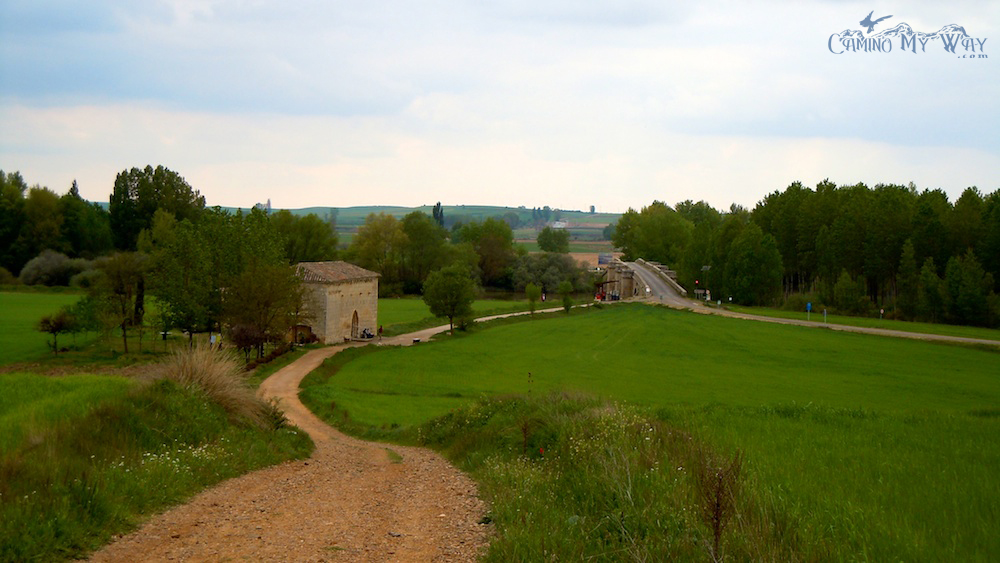
Itero del Castillo, Burgos Spain

Itero del Castillo (Burgos): The Hospital of San Nicolás de Puente Fitero, located beside a bridge over the Pisuerga River in an area controlled by the Order in the Middle Ages, has been restored and converted into a hostel for pilgrims by the Confraternita di San Jacopo de Compostela, of Perugia, in close collaboration with the Spanish Association of the Order of Malta. The Order continues to collaborate with the Confraternita through the CISOM (Italian Aid Corps of the Sovereign Military Order of Malta), whose volunteers will be on duty 23-30 May and from 26 July to 8 August. (The hostel, attended by volunteers of other organizations, will be open from early May to mid October). For more information consult www.Confraternitadisanjacopo.it.

During the Jacobean Holy Years, the Spanish Association of the Order of Malta maintains a First Aid Station in the Cloister of the Cathedral of Santiago de Compostela. It is staffed by volunteers of the Association and teams of volunteers from other national associations and humanitarian organizations of the Order. The First Aid Station will be open from 1 July until 17 October. For more information, consult the Spanish Association of the Order of Malta, email: ordenmalta@cece.es. **This information is several years old, it is advisable to check with the Spanish Assoc. for current dates.**

01 November 2014

What is the Mass

Let’s begin with what the mass is not. 
The mass is not a community meal designed to strengthen our unity and “gather us in.” 
Feelings of unity and community can be strengthened at any number of events, including potlucks or Church picnics. At most, feeling unified with our brothers and sisters in Christ is a nice byproduct of the mass, but it is certainly not its chief end.
Second, the mass is not about you. 
It is not about having a wonderful “weekend experience,” as one new parish based program claims. Nor is its purpose to make you feel good about yourself, to encourage you, to inspire you, or to make you feel included and welcomed. You simply aren’t the audience—God is, and the mass is all about him.
So what is the mass essentially? It is first and foremost a sacrifice. 
In fact, it is the once for all sacrifice of Christ on Calvary, that transcends time and space, made present for us again in an unbloody manner. It is the perfect sacrifice that all the Old Testament sacrifices prefigured (See Malachi 1:11). In it, Jesus Christ lovingly offers himself in an act of oblation to God the Father on our behalf. He adores God the Father, he atones for our sins, he offers thanks and praise, and he intercedes for our needs.

21 October 2014

The Mass, Prayer, and Rosary

From the book The Lord of the World by Msgr. Benson,

Percy sat back, trembling.

"Yes, my son. And what do you think should be done?"

Percy flung out his hands.

"Holy Father—the Mass, prayer, the rosary. These first and last. The world denies their power: it is on their power that Christians must throw all their weight. All things in Jesus Christ—in Jesus Christ, first and last. Nothing else can avail. He must do all, for we can do nothing."

If you have not read this book yet you must. It is one of the best.

Disclaimer

This blog and the opinions are all my own and in no way imply the endorsement from any organization. Nor does a recommendation of another blog or web site imply my agreement or endorsement of everything found on their site.