Showing posts with label Historical Sites SMOM. Show all posts

12 October 2016

MedSeas Tour of Rhodes and Crete

A fellow knight of the Order of Malta has put together a wonderful tour of the former sites of the Knights of St. John on Rhodes. He is a professional tour operator, MedSeas Catholic Journeys, who has taken groups to Malta, the Camino de Santiago in Spain and Portugal, and a Saints, Knights and Wine tour in Italy. This promises to be a spectacular trip and I hope you will consider joining us next September, 2017. Visit the MedSeas website for more information and a detailed itinerary.


Rhodes – The Island of Sun: Discover Rhodes, surrounded by clear blue waters, it’s a land of ancient temples, castles and fortresses, all part of the rich history dating back to the Neolithic era. We will experience its ravishing coastlines, dramatic mountain scapes, classic small villages and historic monuments especially sites linked to the Knights of St. John.

Explore Rhodes and Crete and the History of the Knights of St. John

Chapel of the Knights of St. John Rhodes
Come see the historical home of the Knights of St. John on the island of Rhodes with MedSeas Catholic Journeys, September 22-29, 2017. There will be an optional extension to visit Crete from September 29th-October 3rd.

Some highlights of the trip will include:

Old Town of Rhodes – Knights of St. John • Grand Masters Palace • Archeological Museum  •  Village of Lindos  •  Castle & Acropolis of Lindos • Village of Archangelos  •  Valley of the Butterflies  •  Embona Village  • Anastasia’s Winery  • Castle of Kritinia – Knights of St. John  •  Island of Symi  •  Panormitis Monastery  •  Church of Our Lady of Filerimos  • Ancient city of Kamiros …and more

20 September 2016

English Post - Knights Battle to Defend Rhodes

The English Post in the siege of Rhodes was named for the English knights who were responsible for defending that portion of the walls of the city. It was the scene of some of the heaviest fighting. Twice the knights lost it and twice they won it back. The tenaille is on the left and the main wall is further is visible in the background further behind it.  On the right of the wide dry ditch is the counterscarp that the attackers had to climb down before storming the city wall. The ditch is enfiladed by the Tower of St. John, its bulwark and lower wall providing vertically stacked fields of overlapping fire. The stone cannon balls seen in the ditch are remnants from the fighting. To experience first hand the history of the Knights of St. John please join us on a tour to the beautiful islands of Rhodes and Crete next September. For more information visit MedSeas Catholic Journeys.
Photo courtesy of Norbert Nagel.

09 August 2016

Kilteel Castle - Priory of the Knights of St. John in Ireland

In the village of Kilteel six miles north of Naas at the foot of the Wicklow mountains is Kilteel Castle.

It was built in the early thirteenth century by Maurice Fitzgerald for the Knights Hospitallers of St. John of Jerusalem. The site upon which the castle was built was once a monastic settlement.

It's most notable resident was Sir John Rawson who was the last Prior of the Kilmainham house of the Order before King Henry VIII dissolved the Order.

In 1511 he was appointed Prior of Kilmainham; this was a position of considerable political power, entitling him to sit both in the Irish House of Lords and on the Privy Council of Ireland. In 1517 he became Lord Treasurer of Ireland.

During the second siege of Rhodes in 1522 Sir John was the only knight from Ireland that responded to the Grand Master's request for knights to come to defend Rhodes. After the Siege, Rawson returned to Ireland where he continued to serve as Prior.

When Henry VIII decided to dissolve the Order of St. John of Jerusalem, and after lengthy negotiations Rawson in 1541 surrendered the Priory of Kilmainham in return for a payment of 500 marks and the title of Viscount Clontarf  and the lease of the castle was given to Thomas Alen and his wife.

In 1669 Col. Richard Talbot, Earl of Tyreconnell became the owner of Kilteel. He then sold the castle to Sir William Fownes of Kilkenny where it remained in his family until 1838 when it was sold to the Kennedys of Johnstown-Kennedy.

Today the castle is a designated National Monument. It consists of a tower house dated to the fifteenth century, another projecting towerhouse with a spiral stairs and two further rooms at the gate-way.

05 August 2016

Knights Hospitaller Commandery of Bubicon, Switzerland

According to the inscription in the mural painting of the benefactors in the chapel, Count Diethelm V. of Toggenburg bequeaths the commandery of Bubikon to the Knights Hospitaller in Jerusalem circa 1192.

In 1215 there was a dispute over the land donated to the commandery between the noble families of Rapperswil and Toggenburg comes to an end with the joint re-foundation of the commandery by both families, captured by the painting of the benefactors.

In 1428 the revenues of the Commandery are transferred to the Grand Priory of Germany which was at that time headquartered in Heitersheim. 

Knights of Malta Commandery of Bubikon around 1750. It was sold to a private citizen in 1789. More historical detail can be found at the Ritterhaus Bubikon website. 

In 1938 plans for renovation of the property began and continued until 2011 when it was finally completed. In 1960 the first phase was complete and the property was placed under protection of the Swiss government.


10 September 2015

Archbishop of Malta Celebrates Mass with the Knights of St. John

The link to the homily given by Archbishop Scicluna at the Mass. The Archbishop celebrates a Solemn Mass on the Nativity of Our Lady- maltadiocese

Video of Processional and Recessional parts of the Mass at St. John's Co-Cathedral commemorating the 450th anniversary of the Great Siege of Malta. In the video you will see the resident knight from Fort St. Angelo carrying the sword of Grand Master La Vallette from the Siege.


Prayer in the Cathedral's crypt before the tomb of the Grand Master La Vallette.

06 September 2015

450th Anniversary Procession to Commemorate Great Siege of Malta.

Procession of the Knights of St. John to the Church of Our Lady of Victory in Birgu to commemorate the victory of the Knights and the end to the Great Siege of Malta in 1565.

Liturgical memorial service following the procession.

05 June 2015

The Torpichen Preceptory - Ancient HQ of the SMOM in Scotland


The Torpichen Preceptory was the headquarters for the Knights of Malta in Scotland. 
Here is a link to more pictures and historical information on the Torpichen Preceptory,
http://www.armadale.org.uk/preceptory.htm where the following information was taken.

Torphichen Preceptory, the former administrative headquarters, in Scotland, of the Knights Hospitaller of the Order of St John of Jerusalem, is situated below the Torphichen Hills, in the village of Torphichen, West Lothian, twenty miles west of Edinburgh.  All that remains of the church and monastery (that: once owned vast swathes of land in Scotland; recruited knights and men to fight; organised the care of ill and wounded during their many military campaigns) is represented by a tall tower with singularly high transepts on both sides.
In 1132, David I invited the Order to Scotland.  By 1153, it had been granted a charter to build its Preceptory at Torphichen. The Preceptory became the Hospitallers' principal Scottish house, dependent on the Clerkenwell-based Hospitallers' Priory, which oversaw the British Isles.  Torphichen was significant not only as a sheltered, well-resourced community on a long-distance travellers’ route, but also for its site where a wooden church is thought to have been established by St Ninian. 

By 1168, King William IV decreed that the Chapel at Torphichen should rank as Parish Church and that it should recognise St Michael’s, Linlithgow, as its Mother Church. From the twelfth to the fifteenth century, the Preceptory was built, rebuilt and enlarged. A cruciform church was built with an aisleless nave, central tower, transepts, a choir, and, on the north side, around a cloistered courtyard, domestic buildings (housing the Preceptor’s private quarters, a refectory and kitchen, as well as a dormitory).  The Preceptory was dedicated to John the Baptist and one of its side altars was dedicated to St Ninian.  By 1500, the transepts had been rebuilt with new windows and vaulting, and a new stair-turret had been added to the tower.  The tower and transepts remain today, but the nave was demolished in 1761 to allow for the construction of Torphichen Kirk. 

By the late twelfth century, the Order had accumulated many minor holdings and Malcolm IV added to them by granting the Order one toft in all of his burghs.  This was particularly useful as, by 1300, the Order enjoyed a special category of exemption from secular service in its burgh properties. By 1226, the Hospitallers had continued expanding westward, securing the rights of teinds in nearby Ogilface to add to those they enjoyed in Torphichen.  
The Grand Master and the Pope were involved in the selection of the Preceptor, but the King of Scotland appointed him formally.  The Preceptor was responsible for the administration of ecclesiastical and secular property, as well as for giving spiritual guidance to the Order.  He had to secure the maximum returns from the Preceptory’s properties while paying for the maintenance of buildings in various places, including an Edinburgh townhouse, as well as meeting the cost of the administration of properties scattered over a wide area.  He was responsible for sending his responsions (payment) to the convent in Rhodes via the English Priory at Clerkenwell.

In 1291 and in 1296, Alexander de Welles, Master of Torphichen Preceptory, swore fealty to Edward I and the Order supported the English side during the Wars of Independence. During the period between the Battle of Stirling in September 1297 and the Battle of Falkirk in July 1298, William Wallace and his army camped at Torphichen, the Order probably removing itself to another location during their occupancy.  Before the Battle of Falkirk, Wallace was entertained at Torphichen by the Preceptor Alexander de Welles. The only surviving document signed by Wallace was prepared at the Preceptory during that period.  On 22 July 1298, during the battle, Alexander de Welles was killed.  Also at the battle were Adam de Welle(s) of Lincolnshire, and later of Yester Castle, Lothian, and Philip de Welle(s).  After the battle, the victorious Edward I came to the Preceptory for treatment to his horse-inflicted chest injury, which had happened at his Polmont camp before the battle.  After the success of the English campaign, the Order’s relationship with its Scottish neighbours was more strained, as shown by an English Priory petition to Edward I to allow the Torphichen Hospitallers to be received in Linlithgow Palace when the need arose.  As in the case of the Templars, the Hospitallers’ household was mainly English knights, and their main English house, the Priory, was at Clerkenwell, London.  Such ties with England appear to have made them unpopular in Scotland during subsequent centuries.

Since the arrival of the Knights Templar in Scotland in 1128, as a result of the efforts of their first master, Hugh de Paiens of Champagne, the Order had impressed David I greatly.  It provided the fighting men to defend the Holy Land and the Order was admirably rewarded for its Brother-Knights’ efforts.  Most Templars appear to have been English and they administered their Scottish lands as part of the English Priory.  Also, they served in the royal household from David I’s time and seem to have enjoyed a sound and influential relationship with the Crown, providing the required military presence in the Holy Land while also providing other services at home, such as an almoner to the Scottish throne and a banking service to the English King.

The power of the Order of the Knights Templar through its immense wealth was seen with increasing suspicion by many in Scotland, and so the accusations against the Order’s members, at their Holyrood trial in 1309, were not unexpected.
Three years after the trial, the Order of the Knights Templar was suppressed by Pope Clement V.  Its wealth in Scotland was half as much again as that of the Knights Hospitaller. Its extensive lands in Scotland, (five baronies, patronage of six kirks and sundry lands), which had been administered from its Temple monastery, were granted to the Knights Hospitaller, thereby markedly increasing the property administered by the Torphichen headquarters.  However, there is evidence that the Hospitallers struggled to gain possession of some Templar properties well into the fourteenth century. The re-distribution of estates encouraged dishonest practices, one of those accused of such conduct being Reginald More, a lay administrator at Torphichen. 

After 1312, the Hospitallers acquired most of their appropriated parish churches.  The Preceptor of the Order owned six baronies including Torphichen, each of which contributed towards the maintenance of the Order and his household, but problems arose as each of the baronies was isolated from the others, and so they had to be overseen remotely.  Although the work of the Hospitallers, as well as that of other crusading orders, was widely appreciated, many of the gifts were only small parts of the holdings of the benefactors, and so the geographically scattered gifts were often difficult to administer and unprofitable as assets, unless leased, or even sold.  As a result, Preceptors had to possess sound business skills to ensure the efficient administration of the Order’s holdings.  

By the fifteenth century, many of the properties had been let as a lease or feuferm, initially disapproved of, but accepted, eventually, by the Church. Land donations were given generously, especially by the King and his nobles, so that, by the early 1500s, the Order owned over 700 properties in Scotland, particularly in the Borders, Central Belt and along the east coast, but not in Argyll, Bute or Orkney.  

In 1314, after the Scots’ victory at Bannockburn, the Knights Hospitaller left Scotland, only returning after a reconciliation with Robert the Bruce.  In 1356, the Pope recommended the appointment of David de Mar, Procurator to the Hospital of St John of Rhodes, as Preceptor, but the subsequent appointment caused further controversy, and even his successor was unsuccessful in resolving the issue.  Eventually, it was agreed that all money should be funnelled through the London Priory and that Robert Grant should be appointed to exercise his singular administrative skills. 

Recruited novices were supposed to receive religious training, but this did not happen while their services were needed in the military campaigns of the Middle East.  Priest brothers received training at the monastery while elderly or infirm brothers lived their final years there, receiving care from the hospice.  However, there appears to have been no provision for the physical care of the population who lived outside the Preceptory in Torphichen.  
In the 1430s and 1440s, Andrew Meldrum, principal officer of the Hospitallers, carried out considerable building works.  The Preceptory was extended, the nave rebuilt, the transepts raised significantly, while a cloister on the north side, with surrounding ranges, was completed.  Meldrum’s name even appears on one of the ribs in the vault of the north transept.  Meanwhile, Preceptors and their recruits were involved in sea-battles involving Hospitallers at Rhodes.

In 1466,  the Grand Master awarded William Knollis a grant of the Preceptory, which was confirmed by the Pope a few months later.  Knollis was one of the longest serving Preceptors.  For six years, in the 1470s, he collected alms from visitors (who were then rewarded by indulgences), claiming that James III favoured the church whose ruinous state was clearly in need of help.  After the King’s downfall, Knollis benefited from an illustrious career as a diplomat as well as a public servant, overseeing Torphichen more as a secular barony while being careful to pay the English Priory its dues.  

In 1504, on a visit to Rhodes, George Dundas obtained to right to succeed as Preceptor. In 1508, there was a dispute over the right of the London Priory to appoint a Preceptor in Scotland. James IV, a frequent visitor to Torphichen, believed that the Order in Scotland should be independent. He did not believe Hospitallers born and living in Scotland should have to seek protection from the English Priory, a view he expressed by letters to the Grand Master in Rhodes in 1513. English - Scottish relations were only improved when the Order moved to Malta. 

In Scotland, Dundas succeeded Knollis and was firmly in position from 1518 until his death fourteen years later. Sir Walter Lindsay secured the right of succession after Dundas and he proved to be an effective administrator, as well as a well respected leader of the Scottish army.  He compiled a Rental of the Order’s ownership in Scotland, and, as shown by his Charter of 7 March 1542, he feued the Order’s remote lands, where revenue collection was difficult, to avoid further bloodshed.

On the 29 June 1550, Sir James Sandilands, second son of James Sandilands, Baron Calder, gained possession of the Preceptory, which he held for four years.  He was descended from a family that had owned extensive estates in the area since 1348. In April 1540, the Order in England was closed by an Act of Parliament. The Reformation brought an end to the Hospitallers' Order in Scotland as it was of the Roman Catholic faith, and it was suppressed in 1554.  On 22 January 1564, Sir James Sandilands, Lord St John, surrendered the Preceptory lands to Mary Queen of Scots, to whom he was related.  However, two days later, at the cost of 10,000 crowns of the sun, (gold coins minted in France weighing 50½ grains Troy), and an annual feu duty of 500 merks, he obtained a Royal Charter re-granting them to him as a hereditary barony, as well as the Lord Torphichen title, and these were added to his Barony of Calder, the Sandilands seat being at Calder House (originally Caldour Castle), a few miles from Torphichen.  He sold seven of the eight baronies, including most of Torphichen Barony, to pay his debts, but he retained the Preceptory and Torphichen Mains, thereby retaining his title.

After the Reformation, the Preceptory’s nave was used as Torphichen Parish Kirk, while the remainder of the buildings were allowed to fall into disrepair.  In 1756, Torphichen Parish Kirk was demolished and the remains were restyled to form the foundations of the new T-plan Parish Kirk on the west side of the Preceptory.  The domestic buildings on the north side of the church were demolished, their stone being used elsewhere in Torphichen.  The transepts and the tower became a courthouse of the Regality of Torphichen, but the tower fell into disuse and was only refurbished with a new roof in 1947, twenty years after restoration work was carried out on the Preceptory by the Ministry of Public Building and Works.


18 November 2014

Itero del Castillo, Burgos Spain

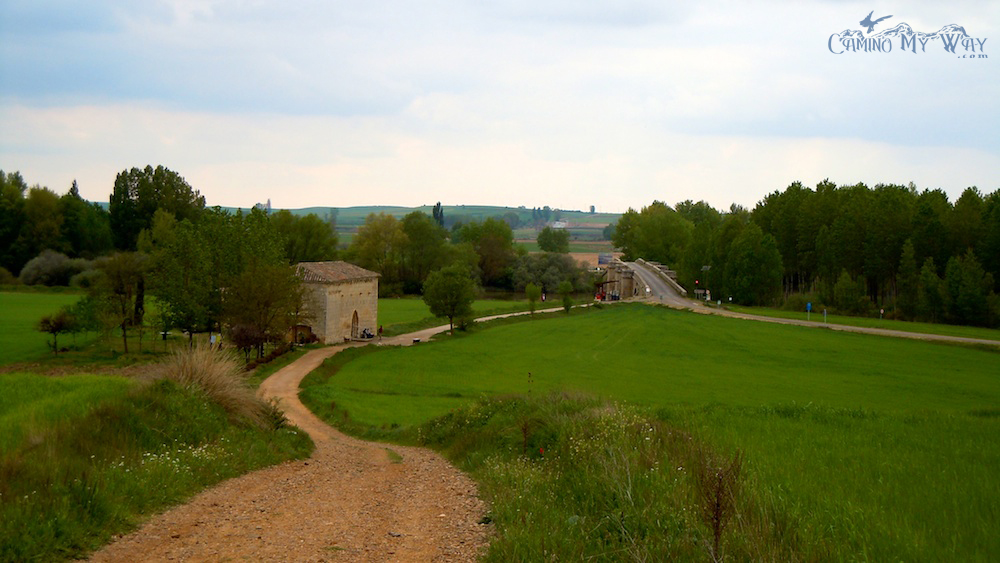
Itero del Castillo (Burgos): The Hospital of San Nicolás de Puente Fitero, located beside a bridge over the Pisuerga River in an area controlled by the Order in the Middle Ages, has been restored and converted into a hostel for pilgrims by the Confraternita di San Jacopo de Compostela, of Perugia, in close collaboration with the Spanish Association of the Order of Malta. The Order continues to collaborate with the Confraternita through the CISOM (Italian Aid Corps of the Sovereign Military Order of Malta), whose volunteers will be on duty 23-30 May and from 26 July to 8 August. (The hostel, attended by volunteers of other organizations, will be open from early May to mid October). For more information consult www.Confraternitadisanjacopo.it.

During the Jacobean Holy Years, the Spanish Association of the Order of Malta maintains a First Aid Station in the Cloister of the Cathedral of Santiago de Compostela. It is staffed by volunteers of the Association and teams of volunteers from other national associations and humanitarian organizations of the Order. The First Aid Station will be open from 1 July until 17 October. For more information, consult the Spanish Association of the Order of Malta, email: ordenmalta@cece.es. **This information is several years old, it is advisable to check with the Spanish Assoc. for current dates.**

15 October 2014

Commanderie of Homps of the Order of Malta

The Commanderie of Homps in the Aude region of southern France was an important commandery of the Order of Malta in this port ciy on the Canal du Midi.
Tomb of the commanders prior to restoration work.

Commanderie of Homps of the Order of Malta

The Commanderie of Homps in the Aude region of southern France was an important commandery of the Order of Malta in this port ciy on the Canal du Midi.
Tomb of the commanders prior to restoration work.

08 October 2014

The Castle of La Couvertoirade

The name of Couvertoirade first appeared in the 11th century by a simple mention in the charter of the Abbey of Gellone (St. Guilhem le Desert.) The Templars were present at La Couvertoirade from the second half of the 12th century. Due to the good quality of the land for agriculture and sufficient water supplies together with a solid rock foundation for building a fortress the Templars settled here in the second half of the 12th century.

The village developed at the foot of the Church and the nearby castle, both built upon the same rock. The Templar's continued the agricultural activity of their predecessors: bread, cereal crops and livestock of sheep for milk, meat and wool.

After the abolition of the Templars at the Council of Vienne in 1312, the Commandery of Sainte-Eulalie to which the Couvertoirade belonged, passed that same year into the hands of the Hospitallers of St. John of Jerusalem. In 1328 the village had between 540 and 600 inhabitants.

During the second half of the Hundred Years War the Commander of Sainte-Eulalie, then Grand Prior of Saint-Gilles, decides to fortify all the villages of the Commandery. The walls encasing the village were built in only four years from 1439 to 1442.


The Larzac region saw an era of prosperity after the end of the Hundred Years War, in 1453. In the second half of the 15th century many new homes were build in the territory.  But a new more destructive storm than the previous one was on the horizon: the Wars of Religion.


During this period the Commander remained in the Castle with a small garrison armed with muskets and led by a captain. This precaution was not in vain and in 1562 the Bishop of Lodève had to come personally with a troupe to unlock the place besieged by the Huguenots.


The last Commander of Sainte-Eulalie and therefore the couvertoirade will be the Commander of Riquetti Mirabeau who was in Malta during the sale of the commanderies of the Order of Malta that were now considered national propertyAt this time the castle was already in very poor condition and small portion served as housing for the farmer of the Commander.


As everywhere the village was affected by a rural exodus but the quality of its heritage allowed it to rebound and it opened to tourists in an early stage from the second half of the 19th century.

There was a video produced by Tourism Aveyron on the chateau which was quite good.


Le village va se développer au pied de l’église et du château voisin, tous deux construits sur le même rocher. Sur ce Causse les templiers vont poursuivre l’activité agricole de leurs prédécesseurs : culture des céréales panifiables et élevage des ovins pour le lait, la viande et la laine.

Après l’abolition de l’ordre du temple au concile de Vienne de 1312, la commanderie de Sainte-Eulalie dont fait partie la Couvertoirade passe la même année aux mains des hospitaliers de Saint-Jean de Jérusalem. En 1328 le village compte 135 feux, soit entre 540 et 600 habitants.

C’est dans la deuxième moitié de la guerre de cent ans que le commandeur de Sainte-Eulalie, alors grand prieur de Saint-Gilles, décide de faire fortifier tous les villages de la commanderie. Les murailles enserrant le village seront construites en quatre années seulement, de 1439 à 1442.

Le Larzac connaîtra une ère de prospérité après la fin de la guerre de cent, en 1453. Sur ce territoire un certain nombre de maisons de la deuxième moitié du XVe siècle en témoignent encore. Mais un nouvel orage plus destructeur que le précédent s’annonce : les guerres de religion.

Pendant cette période le commandeur installe à demeure, dans le château, une petite garnison armée de mousquets avec à leur tête un capitaine. Cette précaution ne sera pas inutile et en 1562 l’évêque de Lodève devra venir en personne avec une troupe pour débloquer la place assiégée par les Huguenots.

La paix retrouvée le village se développe désormais à l’extérieur des murailles dans le barri. Mais il y aura encore une dernière alerte, en 1702, au moment de la révolte des Camisards dans les Cévennes proches. Ce sera la dernière.

Le dernier commandeur de Sainte-Eulalie et donc de la Couvertoirade sera le commandeur de Riquetti Mirabeau qui, lors de la vente des commanderies de l’ordre de Malte considérées comme biens nationaux se trouvait à Malte. A cette époque le château était déjà en très mauvais état et une petite partie servait de logement au fermier du commandeur.

Comme partout le village sera touché par l’exode rural mais la qualité de son patrimoine lui a permis de revivre et il s’est ouvert au tourisme de façon précoce dès la deuxième moitié du XIXe siècle.

Disclaimer

This blog and the opinions are all my own and in no way imply the endorsement from any organization. Nor does a recommendation of another blog or web site imply my agreement or endorsement of everything found on their site.